8 Virginia Trees Facing Invasive Insect Damage Right Now
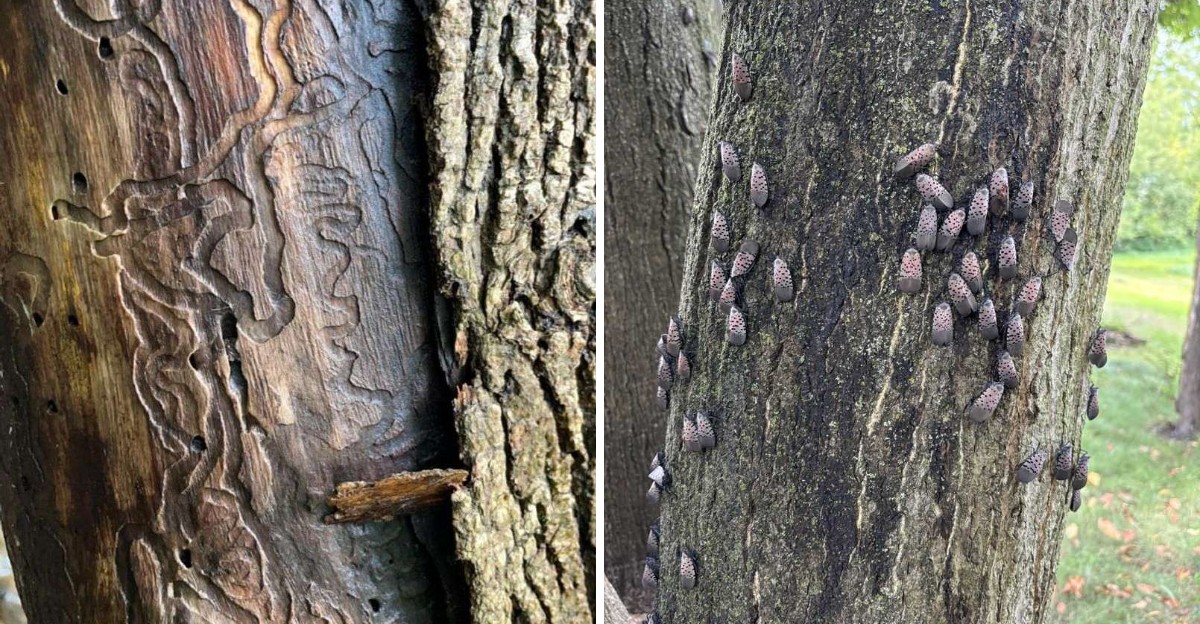
Virginia’s trees can look perfectly healthy from a distance. Up close, tiny insects may be leaving signs that are easy to miss.
Small holes, cracked bark, and odd patches can signal insect activity. Some invasive pests arrived through firewood, nursery plants, or shipping materials and found these trees suitable.
The damage can start quietly. By the time the signs become obvious, the insects may have already spread.
Homeowners can catch many warning signs with a careful look at their trees. Knowing what to spot early can make it easier to respond before the damage becomes more serious.
1. Emerald Ash Borer Targets Ash Trees
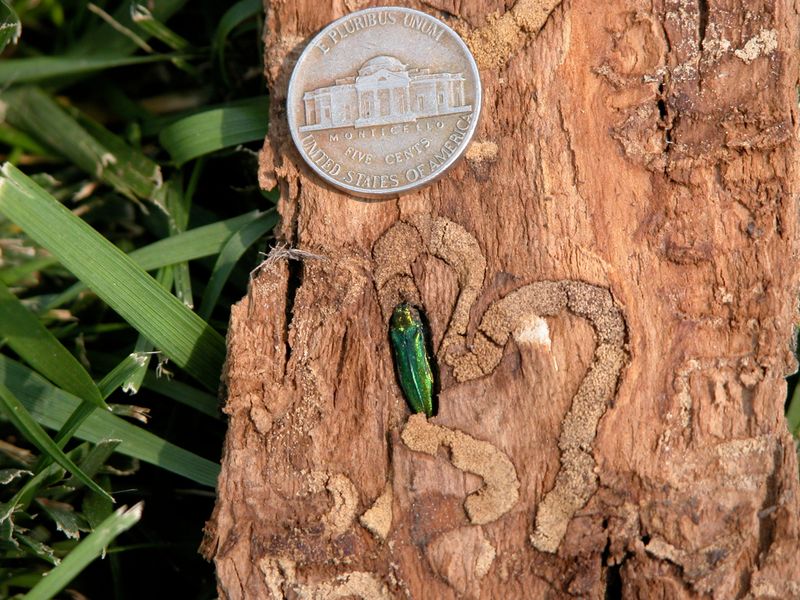
A beetle the color of a shiny green crayon has reshaped Virginia’s tree canopy. The emerald ash borer arrived from Asia and was first detected in the state back in 2008.
Today it shows up in nearly every corner of the state. Green ash and white ash, both common here, sit right at the top of its menu.
Adults are pretty harmless, but the larvae do the real damage underneath the bark. They carve winding tunnels that cut off the tree’s supply lines for water and food.
Once those channels are blocked, the tree starves from the inside. Untreated ash trees can decline within a few years as emerald ash borer damage builds.
Watch for tiny exit holes shaped like a capital D, roughly the size of a pencil tip. Splitting bark, a thinning crown, and sprouts along the trunk are other clues.
Woodpeckers give away the secret too, stripping bark to reach the grubs hiding beneath. Homeowners in Northern Virginia often notice that flaking bark before anything else.
Treatment works best on trees that still look reasonably healthy. Certified arborists can inject or apply insecticides that protect a valued ash for a couple of years at a stretch.
Trees already losing half their canopy rarely bounce back, so timing matters a lot. Inspect your ash every spring and again in midsummer.
Also, leave firewood where you cut it. Moving logs across the counties is how this beetle traveled so far, so fast.
2. Hemlock Woolly Adelgid Weakens Eastern Hemlocks
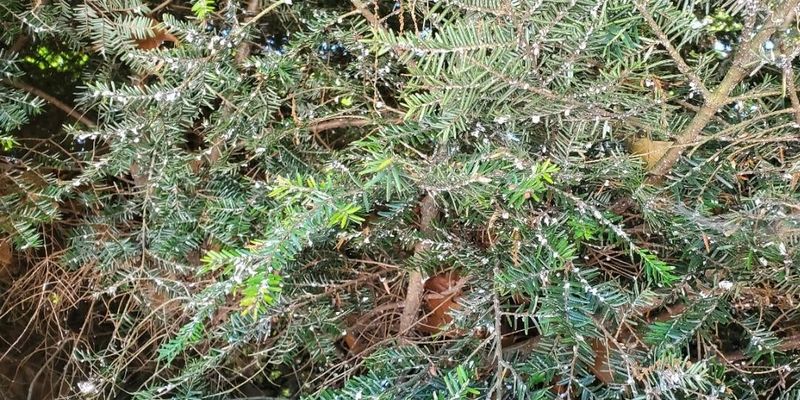
Picture tiny cotton balls glued along the underside of hemlock twigs. That fluff is the hemlock woolly adelgid, an aphid-like insect originally from Asia.
It turned up in Richmond in 1951, likely arriving on ornamental Japanese hemlocks. From that single point, it spread through the mountains.
Feeding happens at the base of the needles, where the insect taps into stored nutrients. Water movement gets disrupted, and the tree slowly runs low on energy.
Needles drop, buds fail to form, and branches thin out from the inside. A hemlock can go from lush to skeletal in just a few years when the infestation is severe.
Shenandoah National Park has felt the loss more than most places in the state. Surveys there recorded declines affecting up to 80 percent of infested hemlocks.
Losing them changes whole streams, since hemlock shade keeps mountain water cool for brook trout. Foresters call hemlock a keystone species for exactly that reason.
Your Virginia Garden Changes Every Week. Your Plan Should Too.
Gardening in Virginia changes quickly throughout the season. Every Friday you’ll receive a simple weekly plan showing exactly what to plant, prune, fertilize, harvest, and protect so you never miss the right timing.
Checking your own trees takes about a minute in late winter. Flip a low branch over and look for those white woolly specks near the needle bases.
Horticultural oil and insecticidal soap help on small landscape trees when spray coverage is thorough. Systemic treatments through the soil work better for taller specimens.
Keeping hemlocks watered during dry summers also buys them strength. Predatory beetles released by researchers offer long-term hope in the forest.
Report heavy infestations to your local extension office. Early reports help track where the insect is heading next.
3. Spongy Moth Strips Foliage From Oak Trees
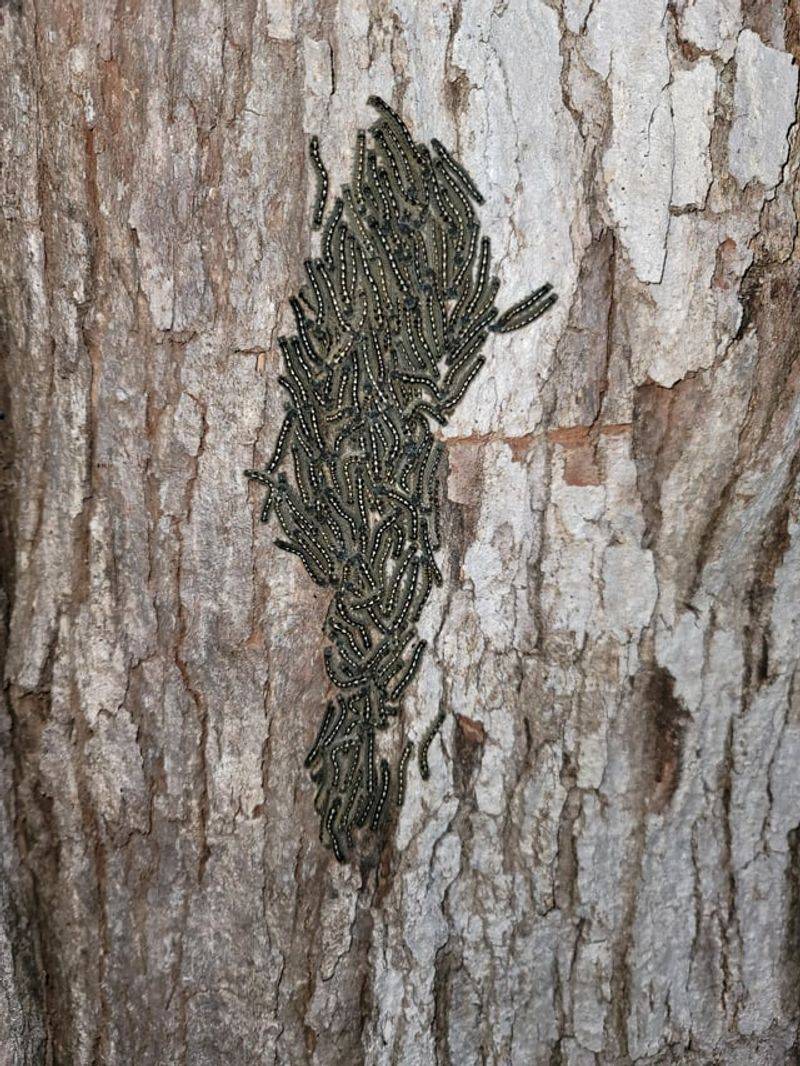
Few insects can turn a shady oak grove into bare sticks by June. Spongy moth caterpillars, once called gypsy moths, manage it in a single season.
European in origin, they escaped a Massachusetts experiment in the late 1800s. Their march southward eventually reached oak-heavy ridges.
Oaks are the favorite, though the caterpillars will sample more than 300 kinds of trees and shrubs. Apple, birch, willow, and even pine end up chewed during big outbreak years.
Healthy oaks can push out a second set of leaves after defoliation. Repeat attacks, however, drain their reserves and open the door to root rots and borers.
Virginia has a spongy moth quarantine to slow its spread, so check outdoor gear and other items before moving them. Campers moving firewood or trailers are a surprisingly common transport service for egg masses.
Those egg masses look like tan, fuzzy patches about the size of a quarter. You will find them on trunks, fence rails, grills, woodpiles, and the underside of lawn furniture.
Scrape them off with a putty knife into a bucket of soapy water. Let them soak a day or two, then toss the whole mess in the trash.
Sticky bands or burlap skirts around trunks catch climbing caterpillars in spring. Check the burlap each afternoon and collect whatever is hiding there.
Watering mature oaks during drought helps them recover faster. Stressed trees struggle much more than well-hydrated ones.
4. Balsam Woolly Adelgid Attacks True Fir Trees
Christmas tree growers in the state’s highlands know this pest by heart. The balsam woolly adelgid is wingless, smaller than a pinhead, and originally from central Europe.
It settled into the mountain country shared by Virginia, North Carolina, and Tennessee. Cool, high elevations suit it just fine.
True firs are the target, which includes balsam fir and the beloved Fraser fir. Fraser fir happens to be especially defenseless against it.
When the adelgid feeds, it injects saliva that acts like a chemical wrench in the tree’s plumbing. Water and nutrients stop moving where they should.
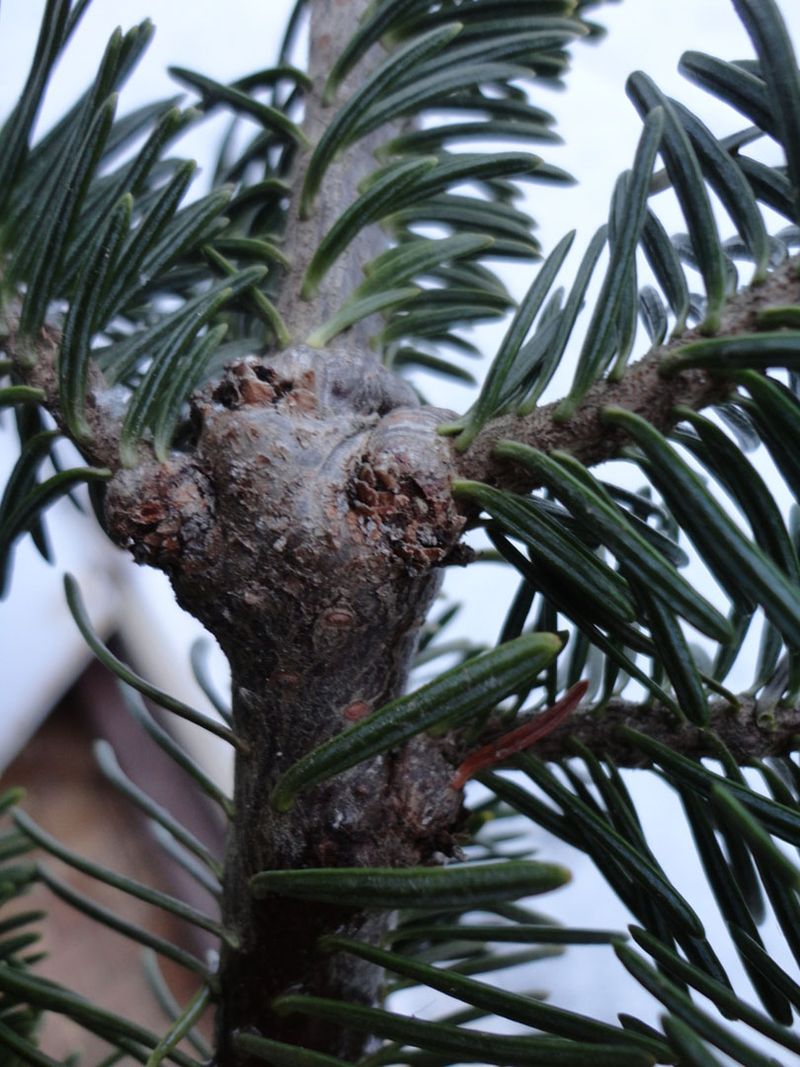
The wood responds by growing abnormally, creating swollen knobs on twigs and branch tips. Growers call the result gouty growth, and it looks exactly as awkward as it sounds.
New shoots twist, needles drop early, and the upper crown thins out first. A tree losing its shape loses its market value too.
Scouting is the best defense, and it costs nothing but a slow walk. Look for white woolly dots scattered across smooth bark, especially near branch nodes and the trunk.
Catching light infestations early lets growers spot-treat rather than lose whole rows. Strong water pressure sprays and registered insecticides both play a role.
Backyard fir owners in southwest of Virginia should check trees each spring. Pruning out heavily gouty branches improves airflow and appearance.
Buy nursery stock from inspected sources whenever possible. Clean plants beat cleanup every single time.
5. Elm Zigzag Sawfly Defoliates Elms
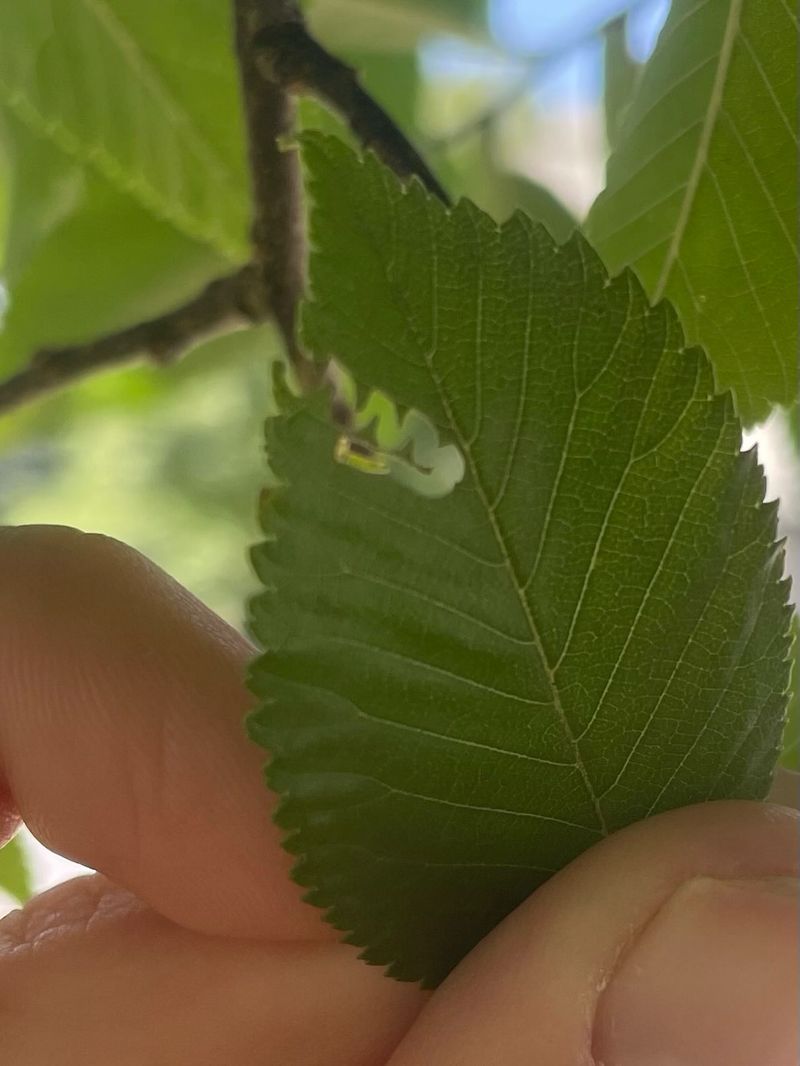
Here is a pest that signs its own artwork. The elm zigzag sawfly leaves a neat, back-and-forth pattern chewed right across an elm leaf.
Native to East Asia, it was confirmed in Virginia in 2021. That record was the first anywhere in the United States.
Most sightings cluster in the Shenandoah Valley, though nobody knows the full range yet. Its spread has been quick, partly because females reproduce without mates.
Siberian, English, lacebark, and hybrid elms all show up on its host list. American elm gets nibbled as well.
Young larvae start at the leaf edge and eat between the veins, making that unmistakable zigzag track. Older larvae drop the artistry and simply devour large chunks.
Heavy years can strip a tree partially or almost bare by midsummer. Watching a favorite elm go lacy is unsettling, no question.
Good news arrives in the form of elm resilience. Vigorous trees typically leaf out again and shrug off occasional defoliation without lasting harm.
Because of that, control usually is not needed in landscapes. Save the effort unless the tree is a specimen you truly treasure.
For high-value elms, a general-purpose insecticide applied at the right larval stage can reduce feeding. Consult an arborist before spraying anything near pollinators.
Mulch, water, and avoid root damage during construction projects. Trees with healthy roots handle leaf loss far better than stressed ones.
6. Spotted Lanternfly Feeds Across Many Tree Species
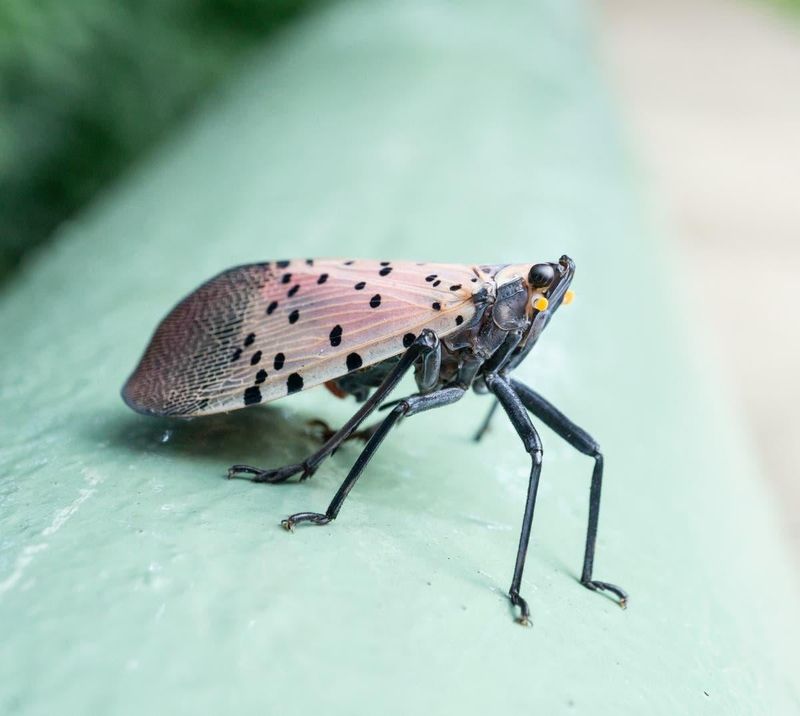
Flashy red underwings make this planthopper look almost tropical. The spotted lanternfly comes from East Asia and was confirmed in Virginia in 2018.
Frederick County saw the first population, and it has spread from there. Winchester residents got an early look at what a swarm feels like.
More than 70 plant species are on its menu, though Tree-of-Heaven is the clear favorite. Funny enough, that host plant is invasive too.
Maples, black walnut, birch, willow, fruit trees, and grapevines all attract heavy feeding. Vineyards have a real financial stake in this one.
Straw-like mouthparts pierce bark and drain sap, leaving trees weaker and slower growing. Wounds ooze, leaves curl, and branches wilt during bad infestations.
The insects excrete sticky honeydew that coats everything below. Black sooty mold then grows on the residue, covering patios, cars, and understory plants.
Virginia repealed its lanternfly quarantine in March 2025. Other states still have rules, so check before hauling plants or equipment across borders.
Residents can help by inspecting vehicles, trailers, and firewood before traveling. Egg masses look like smears of dried mud on flat surfaces.
Scrape them off during winter and dispose of the egg masses so they cannot hatch in spring. Squashing nymphs and adults on sight is fair game as well.
Removing Tree-of-Heaven from your property cuts the buffet considerably. Treat stumps carefully, since cut trees resprout with enthusiasm.
7. Watch Pine Trees For Invasive Pest Pressure
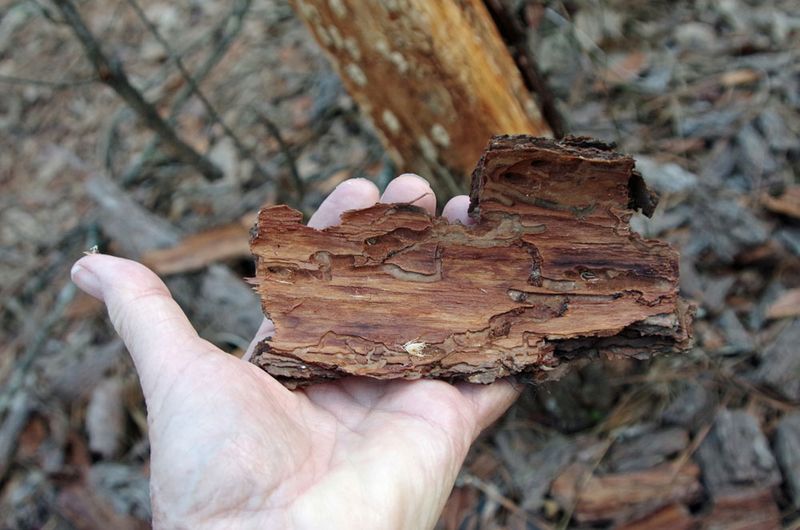
Pines get overlooked in pest conversations, which is a mistake. Two beetles keep foresters busy in the state’s pine stands.
Southern pine beetle is native, yet it ranks as the most destructive forest pest in the Southern United States. Outbreaks flare up when stands grow crowded and stressed.
Loblolly, shortleaf, and Virginia pine all fall within its range of targets. A single outbreak can sweep through acres in one warm season.
The beetle tunnels beneath bark, chewing the tissues that move water upward. It also carries a blue-stain fungus that clogs the plumbing further.
Canopy color shifts from green to yellow, then to a rusty red. Popcorn-shaped pitch tubes and reddish-brown dust in bark crevices confirm the diagnosis.
Pine shoot beetle is the imported half of the pair, originally from Europe. It now shows up in parts of the state.
Larvae develop under the bark of weakened trees, while adults bore into living shoots. Growth slows, stems bend, and Christmas tree quality suffers.
Shoot beetle damage rarely finishes a tree, but it dents value on plantations. Growers notice the crooked leaders right away.
Thinning dense pine stands is the strongest long-term defense against both insects. More space means healthier trees with better resin defenses.
Remove and process infested trees quickly, and keep untreated wood local. Prevention beats reaction whenever pines are involved.