Blue Jays Taking Over Your New York Feeders? Here’s What To Do
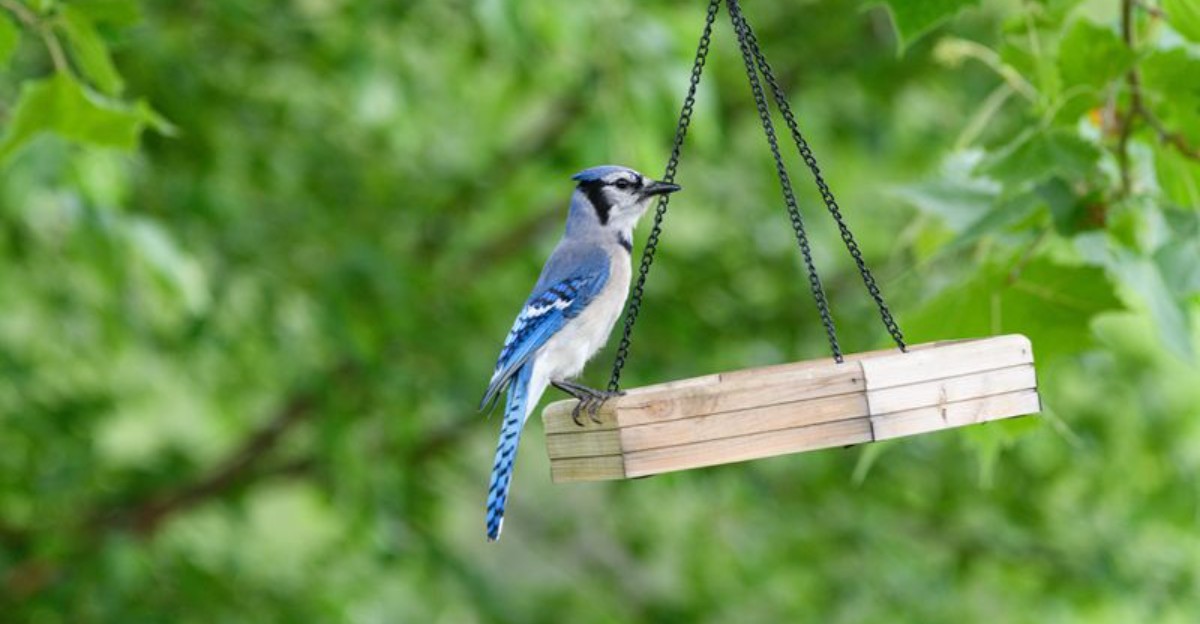
A flash of blue, a piercing scream, and your feeder looks like a crime scene of scattered seed. If you feed birds in New York, you’ve probably met this crested bully.
Blue jays swoop in like they own the place, grabbing peanuts and scaring off chickadees. Fall makes it worse, since they’re busy stashing food for winter.
You can share your yard without handing it over. A few smart changes can tip the balance back toward the smaller birds.
Some fixes cost nothing, while others need a small trip to the garden store. Knowing why jays act this way makes each one easier to pull off.
The steps below give every bird a turn at the feeder. You might even come to see these brash visitors in a friendlier light.
Understand Why Jays Swarm Feeders In Fall
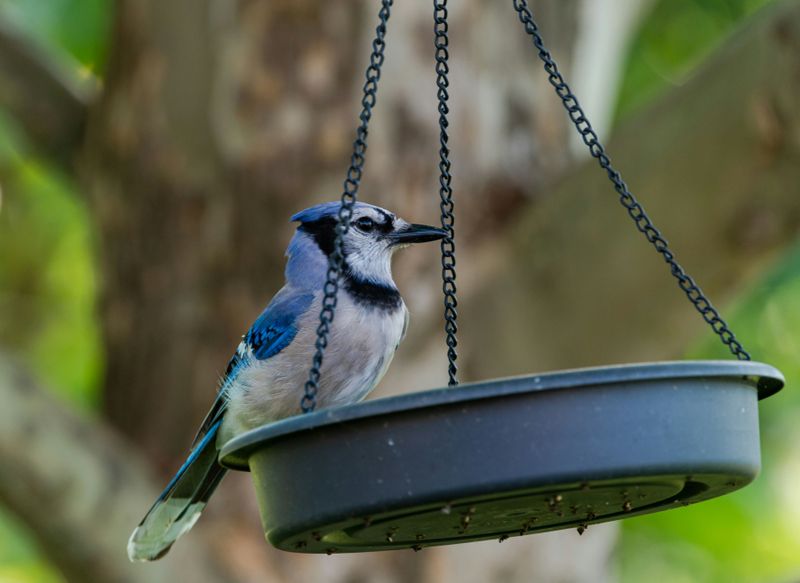
Picture a gang of blue-feathered teenagers crashing a snack bar every September. Your yard suddenly gets loud, busy, and a little chaotic.
Fall is peak season for Blue Jay activity across New York. From about August to October, they gather in bigger groups after nesting ends.
Their main mission is stocking up for winter. Blue Jays collect nuts and seeds, then bury them in hidden spots around the neighborhood.
Scientists call that habit caching, and a single jay can stash thousands of acorns. Your feeder looks like a free grocery store to a bird with that kind of goal.
Some jays head south in autumn, especially when acorns are scarce. Plenty of others stay put all year long.
Here is the strange part about their travels. Experts still do not fully understand Blue Jay migration, and one bird may migrate one year but not the next.
Knowing their schedule helps you plan ahead. Start adjusting feeders in late summer, before the big fall rush begins.
Watch closely and you will notice jays flying off with stuffed throats. They carry several seeds at once in a stretchy pouch, then fly away to hide them.
Once you see the pattern, the frenzy feels less personal. Those birds are not trying to annoy you, just planning for cold days.
A little patience goes a long way here. Activity usually calms down once winter arrives and their pantries feel full.
Offer Nyjer Or Other Seeds Jays Skip
Ever notice how picky eaters change a dinner party? Blue Jays are fussy too, and you can use that to your advantage.
Their favorite foods are big and hearty. Black oil sunflower, striped sunflower, peanuts, and cracked corn top their wish list.
Safflower seed is a clever swap worth trying. Its slightly bitter flavor turns off jays, grackles, starlings, and even squirrels.
Smaller birds happily munch safflower anyway. Chickadees, titmice, purple finches, doves, and downy woodpeckers will still visit your yard.
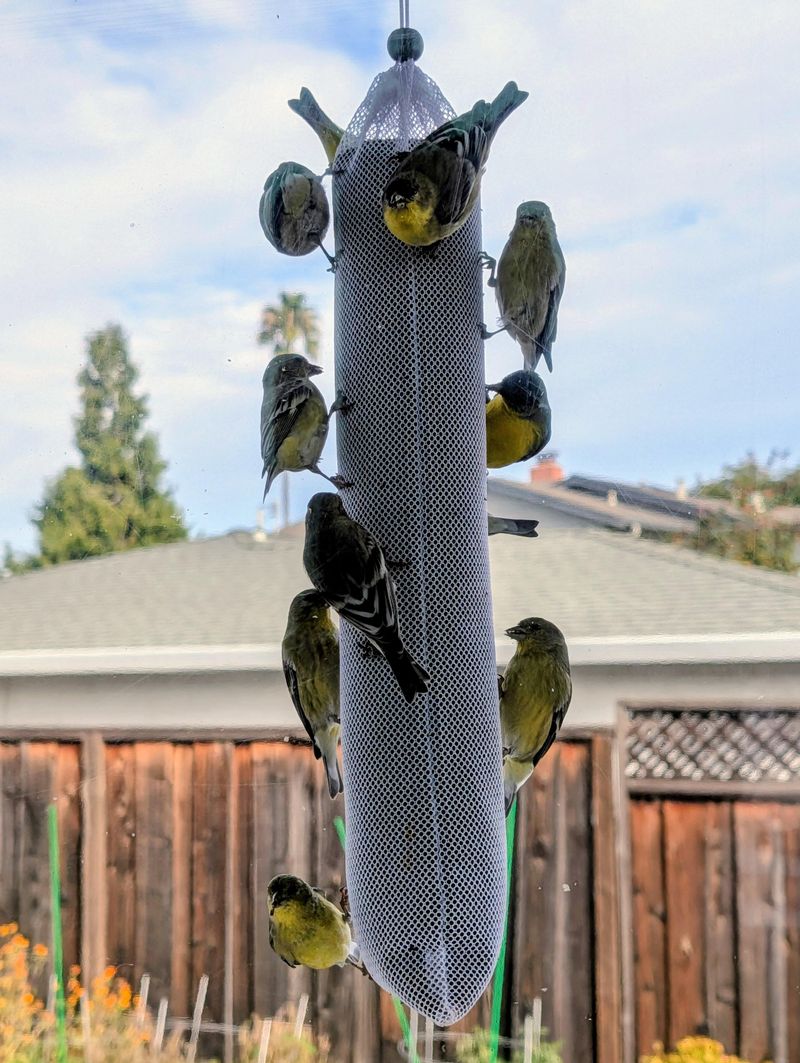
Nyjer, sometimes called thistle, is another great pick. Goldfinches, pine siskins, juncos, and redpolls love the tiny black seeds.
Jays mostly ignore Nyjer because the seeds are too small to bother with. For a big bird, eating them feels like snacking on sand.
Your New York Garden Changes Every Week. Your Plan Should Too.
Gardening in New York changes quickly throughout the season. Every Friday you’ll receive a simple weekly plan showing exactly what to plant, prune, fertilize, harvest, and protect so you never miss the right timing.
You will need a special feeder for Nyjer. Mesh socks or tubes with tiny holes keep the little seeds from spilling everywhere.
Fun fact for curious readers out there. Nyjer seed is not actually thistle at all, but comes from an African plant related to sunflowers.
Keep realistic expectations with any seed switch. Hungry jays may still poke around if their favorite foods are hard to find nearby.
Mixing strategies usually works best for most backyards. Pair your new seed with one of the feeder tricks coming up next.
Switch To Tube Feeders With Short Perches
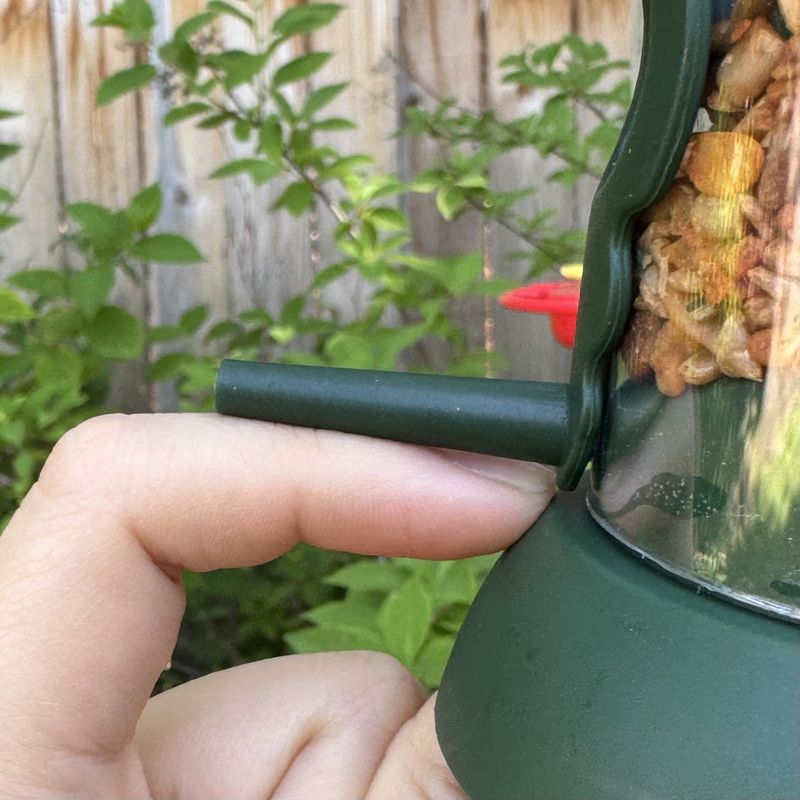
Think of a tiny stool at a crowded counter. A small bird perches easily, while a big jay wobbles and gives up.
Tube feeders with short perches work exactly like that stool. Blue Jays are simply too large to land comfortably or reach into small ports.
Finches, chickadees, and nuthatches find these feeders perfect. Their small feet grip short perches with no trouble at all.
Look for models with perches placed above the seed holes. Birds then hang slightly upside down to eat, which bigger birds find awkward.
Perch size matters more than most people realize. A 5/8-inch perch can keep out House Sparrows while still welcoming American Goldfinches.
Go even smaller for tiny visitors. A 1/2-inch perch may exclude House Finches, leaving room for the littlest songbirds.
Cardinals and Mourning Doves also struggle with most tube designs. Plan a separate spot for them if you enjoy their company.
Shopping tip worth remembering at the store. Metal ports hold up better than plastic, because squirrels and jays love to chew and pry.
Cleaning a tube feeder is fairly simple too. A long bottle brush and warm, soapy water handle the job every couple of weeks.
Fill it with sunflower hearts or safflower for best results. You will likely see your small regulars return within a few days.
Use Cages To Block Larger Birds
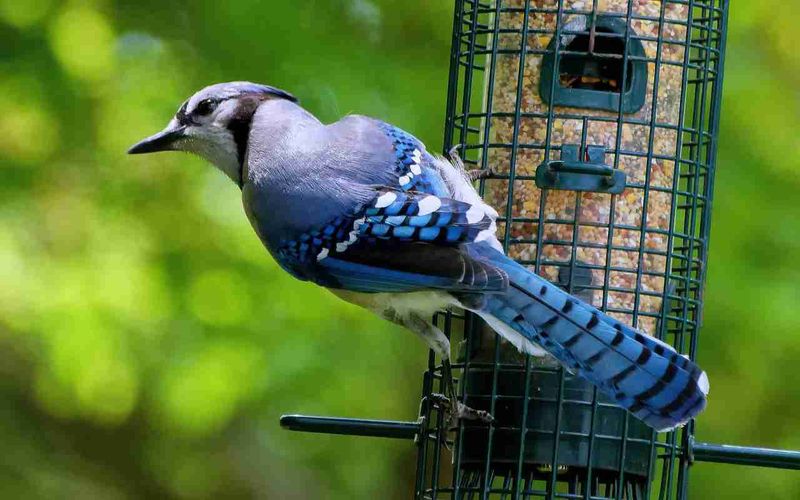
Bouncers keep the wrong crowd out of fancy clubs. A caged feeder does the same job for your backyard birds.
Picture a seed tube wrapped inside a sturdy wire cage. The openings are sized just right for small birds to slip through.
Chickadees, finches, and nuthatches zip in and out easily. Blue Jays, grackles, and starlings bump against the mesh and stay outside.
Inside that cage, little birds can eat in peace. They no longer need to dodge pushy neighbors every few seconds.
Squirrels get frustrated by cages as well. Raccoons also have a harder time reaching the seed, which saves you money.
Some caged designs add a dome or tray. Those extras protect seed from rain and snow, and they help reduce messy spills.
Many bird lovers use a smart two-feeder system. One caged feeder serves small birds, while an open feeder elsewhere lets jays eat too.
Sharing that way keeps everyone fairly happy. Jays get their snacks, and your chickadees get a private dining room.
Check cage spacing before you buy one. Openings around 1.5 inches usually work well for blocking jays while welcoming small songbirds.
Watch for clever birds testing the gaps at first. Woodpeckers sometimes squeeze in, and that is usually a fun bonus to see.
Try Weight-Activated Feeders
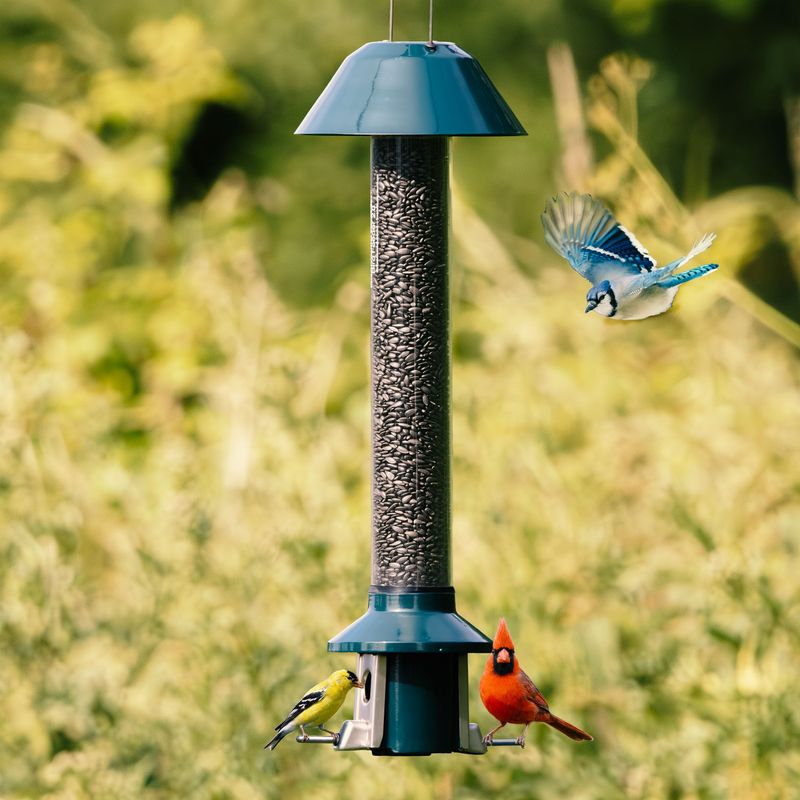
Imagine a vending machine that only works for lightweights. That is basically how a weight-activated feeder handles heavy visitors.
These feeders close their ports when something too heavy lands. A sliding shroud or dropping perch blocks the seed in an instant.
Small songbirds weigh very little, so nothing happens when they land. A chickadee tips the scale at less than half an ounce.
Blue Jays weigh roughly three ounces, which is heavy enough to trigger the closing mechanism. Squirrels set it off too, adding a nice bonus.
Some fancy models let you adjust the weight setting. You can tune it to welcome cardinals while still turning away jays.
No gadget is perfect, though, and jays are smart. A few may learn to cling to the side and sneak a bite anyway.
Expect to spend more on these feeders than on basic ones. Many last for years, so the cost often balances out over time.
Pairing your feeder with a baffle boosts its power. A baffle stops squirrels from climbing the pole and reaching the feeder.
Give the birds time to figure things out. Small birds usually adjust within a week, while jays grow bored and move on.
Check the mechanism after ice storms or heavy snow. Frozen parts may stick, so a quick wipe keeps everything moving smoothly.
Set Up A Peanut Decoy Feeder Away From The Main Station
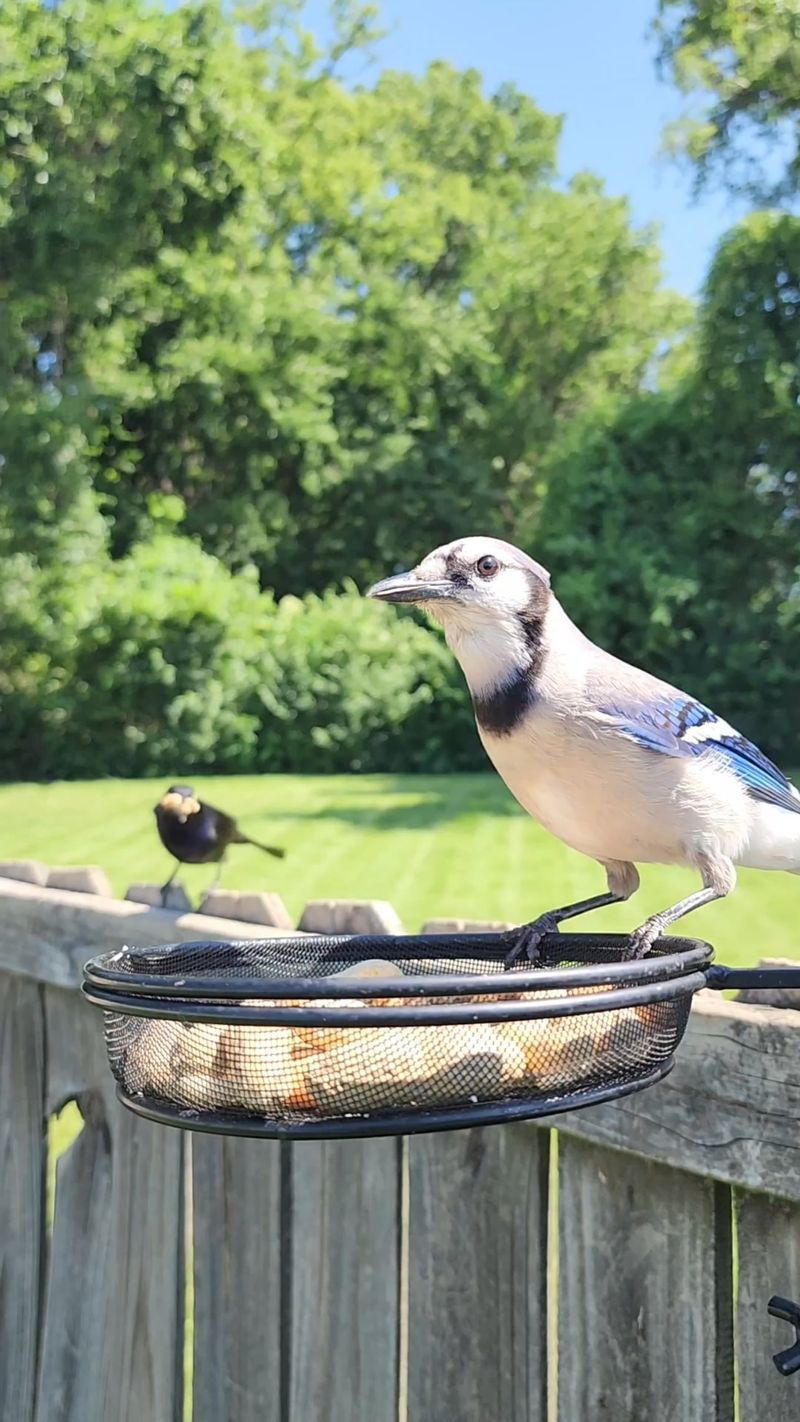
Sometimes the best way to win a fight is to avoid it. Give the jays their own snack spot, and they may leave your main feeders alone.
Peanuts are pure treasure to a Blue Jay. In-shell peanuts are especially popular because jays love cracking and hiding them.
Set up a decoy feeder stocked with peanuts. Place it at least 30 feet from your main feeding area.
That distance creates two separate zones in your yard. Jays crowd around the peanut station, while small birds enjoy the quieter space.
Coil-style peanut feeders work wonderfully for jays. They can cling to the spiral, pull out a peanut, and fly off proudly.
Watching them is honestly half the fun. A jay may test several peanuts, judging weight before choosing the heaviest one.
Many birds carry peanuts away to bury them. You might find surprise peanut plants sprouting in your garden next spring.
Keep the peanut feeder stocked regularly for best results. A steady supply teaches jays to visit that spot first each morning.
Buy raw, unsalted peanuts only for your birds. Salted or flavored nuts can upset their health and should stay in your pantry.
Store extra peanuts in a sealed metal can. Damp nuts can grow harmful mold, so keep them cool and dry.
Skip Open Platform Trays
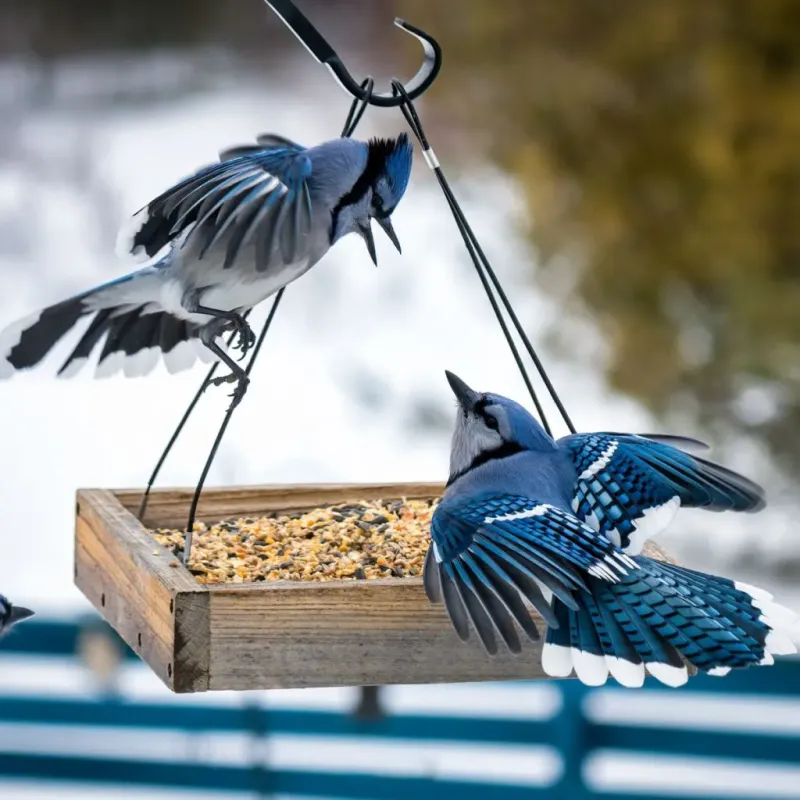
Laying out an open tray is like rolling out a red carpet. Big birds see a wide landing zone and an all-you-can-eat buffet.
Platform feeders give jays tons of room to land and feast. Peanuts and sunflower seeds sit right out in the open for easy grabbing.
Sure, cardinals and doves enjoy trays as well. Sadly, pushy birds like jays, grackles, and starlings often take over fast.
Weather causes another headache with open trays. Rain, snow, and bird droppings soak seed and can turn it moldy.
Spoiled seed is bad news for bird health. Wet piles also draw rodents and other unwanted guests into your yard.
Refilling becomes a chore too. Most trays hold less seed than tubes, so you may restock them more often.
For yards battling jay crowds, skipping trays for general seed makes sense. Swap them for tubes or caged feeders instead.
Love your tray too much to toss it? Move it to the jay zone and fill it only with peanuts.
Drainage holes help if you keep using one. A screen bottom lets water drip away, keeping seed drier and safer.
Scrub any tray weekly with mild soap and water. Let it dry fully in the sun before adding fresh food.
Sweep Up Spilled Seed
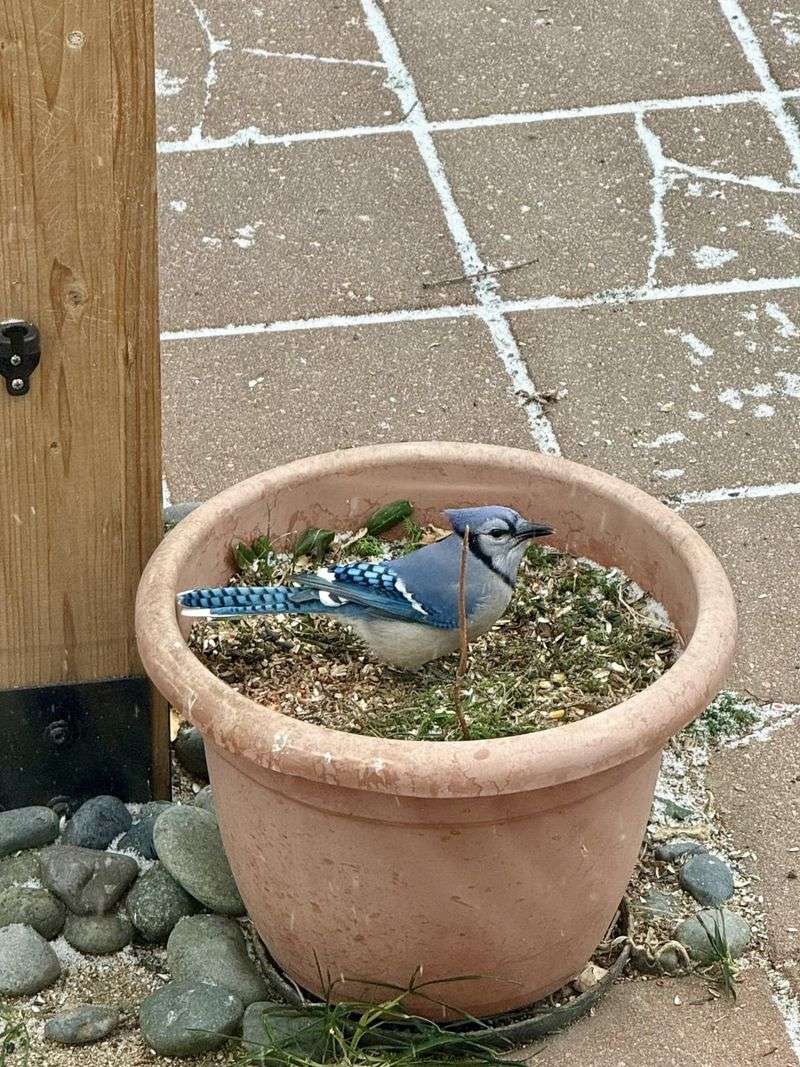
That messy pile under your feeder is more than an eyesore. It can quietly create big problems for birds and your lawn.
Jays are famously sloppy eaters. They toss seeds aside while hunting for favorites, leaving a carpet of shells below.
Old, wet seed is a perfect home for mold and bacteria. Those germs can make backyard birds seriously sick.
Salmonella outbreaks have been confirmed in New York in recent years. Common redpolls and other feeder birds were affected.
Other illnesses spread through dirty feeding areas too. Mycoplasma conjunctivitis and trichomoniasis are two examples bird experts watch closely.
Spilled seed also rings the dinner bell for pests. Mice, rats, and even roaches may start showing up uninvited.
Your grass suffers as well, believe it or not. Sunflower shells contain natural chemicals that block growth and leave yellow patches.
Grab a rake or broom every few days. A quick sweep keeps the area cleaner and much safer for visiting birds.
Here is a handy shortcut worth trying. Hulled sunflower hearts create far less mess, since there are no shells to drop.
A seed-catching tray under the feeder helps too. Empty it often so it does not become a tiny mold farm.
Hang Feeders Closer To Cover For Small Birds
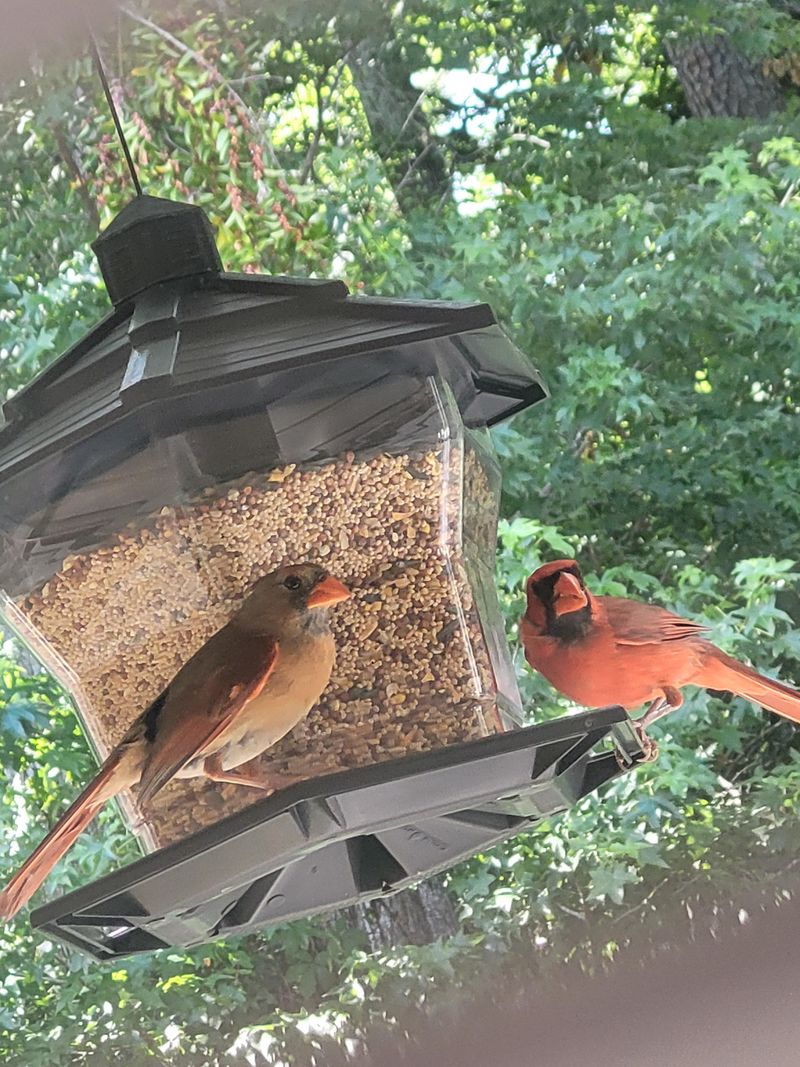
Small birds live life on high alert. One shadow from a hawk, and they need a hiding spot within seconds.
Shrubs and trees act like safe rooms for tiny songbirds. Branches give them a quick escape from cats, hawks, and bossy jays.
Aim to place feeders about 5 to 12 feet from dense cover. Small birds can dash to safety without predators lurking right beside them.
In New York backyards, 5 to 10 feet from shrubs often works well. Many people notice more bird activity after moving feeders closer.
Evergreens make outstanding neighbors for a feeder. Spruce, pine, and holly offer shelter all year and block harsh winter winds.
Chickadees love a grab-and-go routine. They snatch one seed, zip into a bush, and crack it open in private.
Window safety deserves your attention too. Place feeders within 3 feet of glass or more than 30 feet away.
Close placement keeps birds from building up crash speed. Far placement gives them room to steer clear of reflections.
No shrubs in your yard yet? Plant a native viburnum or serviceberry, which adds cover and tasty berries.
Brush piles also offer quick shelter for small birds. Stack branches loosely in a corner for an easy, free hideout.
Appreciate Them As Great Alarm Callers
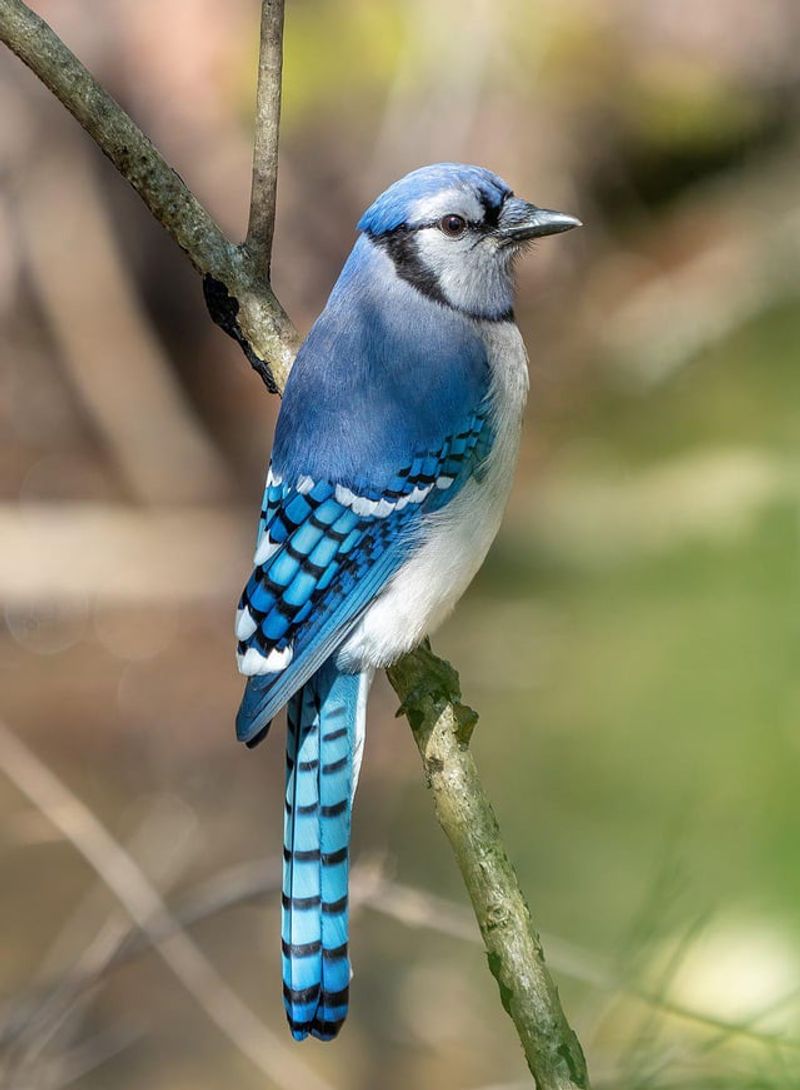
Before you write off Blue Jays as pure troublemakers, hear this out. Your loud blue neighbor might be the best security guard on the block.
Jays scream loudly when they spot danger. Hawks, owls, and prowling cats all set off their famous alarm calls.
Smaller birds pay close attention to that racket. When jays sound the alarm, chickadees and finches quickly dive for cover.
Blue Jays are also talented mimics. They can copy Red-shouldered and Red-tailed Hawk calls with surprising accuracy.
Scientists still debate why they do it. Some think it warns other jays, while others suspect a trick to clear feeders.
Either way, that skill shows real brainpower. Jays belong to the corvid family, alongside clever crows and ravens.
From Brooklyn to Buffalo, jays help keep New York bird communities alert. Their noisy warnings give smaller species precious extra seconds.
Jays also help forests grow, which feels pretty heroic. Forgotten acorns they bury often sprout into future oak trees.
Next time a jay shrieks outside, look up. You might catch a hawk circling or an owl tucked into a nearby tree.
Balance is the real goal for any New York yard. With a few smart tweaks, jays and songbirds can share the space peacefully.